

In mid-May this year, we received an invitation we had been hoping for since we started Yamada Chaya.
Our matcha farm in Uji, Japan asked us to come and visit the 2026 spring harvest in person. Not a supplier meeting. Not a trade visit. A personal invitation to stand in the fields, meet the farmers, and see for ourselves what we have been bringing to New Zealand. We said yes immediately.
Yoshi grew up an hour from here
Yoshi was born and raised in Shiga, a region with its own long history of tea production, about an hour's drive from Uji. He grew up knowing those fields were there. Knowing what they produced. It took moving to New Zealand to understand why he wanted to share it.
We started Yamada Chaya because we believed New Zealand deserved access to the real thing. Not matcha as a trend, not matcha as a supplement, but matcha as Japan has understood it for over 800 years. Coming to Uji together, to the farm at the heart of what we do, was one of those moments that reminds you why you started.

What we found in Uji
We drove out through the hills of Uji in a small kei truck. If you have never seen a Japanese tea farm in person, nothing quite prepares you for it.
The tana shade nets were still up over the fields when we arrived. These traditional suspended frames cover the tea plants for three to four weeks before harvest, blocking most of the sunlight and triggering something remarkable in the leaves. Without direct light, the plants concentrate chlorophyll and L-theanine deep into every leaf. That is where the vivid green comes from. That is where the smooth, rich umami flavour comes from.
It had been an exceptional growing year. Generous sun, very little rain, exactly the conditions that produce the finest spring matcha. The harvest was almost complete by the time we arrived in mid-May, the last of the picking finishing under those nets as we watched. When a season is this good it moves fast.

From leaf to tencha
After picking, speed matters. The freshly harvested leaves are steamed immediately to stop oxidation and lock in that green. Then dried flat, not rolled like sencha or other Japanese teas. Then carefully de-stemmed and de-veined until only the pure leaf material remains.
What is left at this stage is called tencha. It does not look like much. Flat, dry, dark green flakes. But tencha is the foundation of everything. The quality of your matcha is determined here, long before any grinding begins.
Our farmers showed us the processing stages.


The rest, and why it matters
Quality tencha is not ground immediately. It is stored in cold storage, resting until the flavour develops complexity and balance. This traditional practice is called kuradashi, and it is one of the markers of properly made Uji matcha. You cannot rush it. The patience is part of what ends up in your cup.
When the tencha is ready, it is stone milled at around 40 grams per hour. Granite wheels turning slowly to avoid heat, which would damage the colour and flavour. Forty grams. Per hour. That is how deliberate this process is.

Why this matters for what you buy
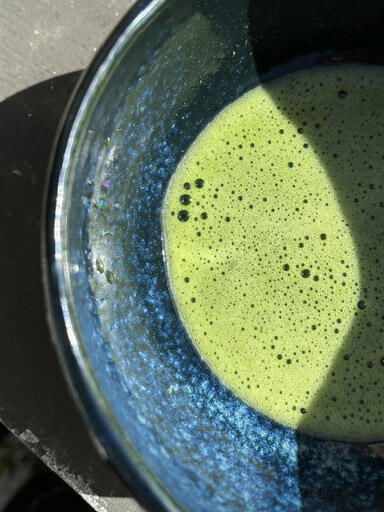
Cheaper matcha skips most of this. Different regions, faster processing, shorter resting time, often blended with lower grade green tea powder. The colour in the tin tells you a great deal. Vivid, bright green means high chlorophyll, careful processing, real shade growing. Dull, olive or overly yellowish green means the opposite.
We are not in the business of telling you other matcha is bad. We are in the business of showing you what good looks like. This trip was the clearest reminder we have had of why that distinction matters.

What is in stock now
Our Premium Uji Matcha is back in stock following this harvest. It is our blend of first and second flush Uji matcha, stone milled, shade grown, and now on its way to New Zealand.
If you have been curious about trying the real thing, this is where to start. You can find it in the shop here.
First harvest single origin tins are limited and will be available when they are ready. Join our list to be first to know.
Thank you for being part of this with us. It means so much to us to have you along for the journey.
^Yoshi and Kayleigh
Yamada Chaya
0 comments